
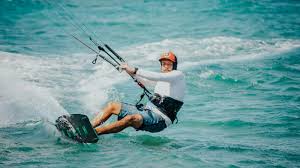
Kite surfing is one of the most exciting water sports in the world. It combines elements of surfing, windsurfing, and paragliding to create a thrilling activity powered by wind and water. In this sport, a rider stands on a small board while holding onto a large controllable kite that pulls them across the water. The power of the wind allows riders to glide quickly over waves, perform jumps, and even fly several meters into the air.
The popularity of kite surfing has grown significantly in recent years because it offers adventure, freedom, and a close connection with nature. People who enjoy ocean sports often find kite surfing appealing because it combines skill, physical activity, and adrenaline. Today, this sport is practiced in coastal areas, lakes, and windy beaches all around the world.
What Is Kite Surfing
Kite surfing, also known as kiteboarding, is a water sport where a rider uses a large kite to harness the power of the wind. The kite is connected to the rider through strong lines and a control bar. By steering the kite and balancing on the board, the rider can move across the water at high speeds.
The basic idea behind kite surfing is simple: wind fills the kite and generates power, which pulls the rider forward. By adjusting the angle of the kite and the direction of the board, the rider can control speed and movement.
Although it may look easy, kite surfing requires practice and training. Beginners usually take lessons to learn how to control the kite safely before attempting to ride on the water.
History of Kite Surfing
The concept of using kites to move across water has existed for centuries, but modern kite surfing began developing in the late twentieth century. Early inventors experimented with inflatable kites and control systems that could generate enough power to pull a person on water.
During the 1990s, improvements in kite design and safety systems helped make the sport more accessible to the public. As equipment became more reliable, more people began learning the sport, and kite surfing schools started appearing in coastal areas.
Today, kite surfing has grown into a global sport with professional competitions, training centers, and international communities of enthusiasts.
Equipment Used in Kite Surfing
Kite surfing requires specialized equipment designed to harness wind power safely. The most important piece of equipment is the kite itself. Modern kites are usually inflatable and made from durable materials that allow them to remain stable in the air.
Another essential piece of equipment is the board. Kiteboards are typically smaller and lighter than traditional surfboards, making them easier to control while being pulled by the kite.
Riders also use a control bar connected to several lines that attach to the kite. This bar allows them to steer the kite and adjust its power. A harness worn around the waist or hips helps distribute the pulling force of the kite, allowing the rider to maintain balance and control.
Additional equipment may include safety leashes, helmets, and protective clothing such as wetsuits, depending on water temperature and conditions.
Learning the Basics of Kite Surfing
Learning kite surfing usually begins with understanding how to control the kite on land. Beginners practice flying the kite in a safe open area to learn how wind direction affects movement. This training helps them develop coordination and confidence before entering the water.
After mastering basic kite control, students move into shallow water to practice body dragging. Body dragging involves using the kite to pull the rider through the water without standing on the board. This stage helps beginners learn how to control direction and speed.
Once these skills are learned, riders begin practicing standing on the board while controlling the kite. This stage requires patience and balance, but with practice, most learners gradually improve and gain confidence.
Safety in Kite Surfing
Safety is an important part of kite surfing because the sport depends on strong wind conditions. Beginners should always take lessons from experienced instructors before attempting to ride alone.
Understanding wind direction, weather conditions, and water currents is essential for safe kite surfing. Riders should avoid extremely strong winds and crowded areas where collisions may occur.
Modern equipment includes safety systems that allow riders to quickly release the kite if they lose control. Wearing safety gear and maintaining awareness of surroundings can significantly reduce risks.
Physical and Mental Benefits
Kite surfing offers several physical and mental benefits. The sport provides a full-body workout because it requires strength, balance, and coordination. Muscles in the legs, core, and arms are constantly engaged while controlling the board and kite.
In addition to physical exercise, kite surfing can improve mental well-being. Spending time in nature and focusing on the rhythm of wind and water can reduce stress and increase feelings of relaxation and freedom.
Many people also find the challenge of learning new skills motivating and rewarding.
Popular Locations for Kite Surfing
Kite surfing can be practiced in many coastal areas where steady wind and open water are available. Beaches with consistent wind conditions are especially popular among kite surfers.
Some famous destinations for kite surfing include tropical beaches, windy coastal regions, and large lakes. These locations often have schools and rental centers where beginners can learn and experienced riders can practice advanced techniques.
Traveling to different kite surfing destinations allows enthusiasts to explore new environments while enjoying the sport.
Competitive Kite Surfing
As the sport has grown in popularity, professional competitions have also developed. Competitive kite surfing includes events where riders perform jumps, tricks, and freestyle maneuvers in front of judges.
Some competitions focus on speed racing, where riders compete to travel the fastest distance using wind power. Others emphasize creative tricks and aerial stunts.
These events attract skilled athletes from around the world and help promote the sport to new audiences.
The Future of Kite Surfing
The future of kite surfing looks promising as equipment technology continues to improve. Modern kite designs are becoming safer, lighter, and more efficient. These improvements make the sport easier to learn and more enjoyable for experienced riders.
Environmental awareness is also encouraging water sports that rely on natural energy such as wind. Since kite surfing is powered entirely by wind, it represents a sustainable and eco-friendly form of recreation.
As more people discover the excitement of wind-powered water sports, kite surfing will likely continue to grow in popularity around the world.
Conclusion
Kite surfing is an exciting water sport that combines wind power, balance, and adventure. By using a large kite and a specially designed board, riders can glide across water, perform jumps, and enjoy the thrill of ocean sports.
Although the sport requires training and practice, many people find it rewarding because of the freedom and excitement it offers. With the right equipment, proper safety knowledge, and suitable wind conditions, kite surfing can become a memorable and enjoyable activity.
As technology advances and more people discover the sport, kite surfing will continue to attract enthusiasts who seek adventure and connection with the natural elements of wind and water.